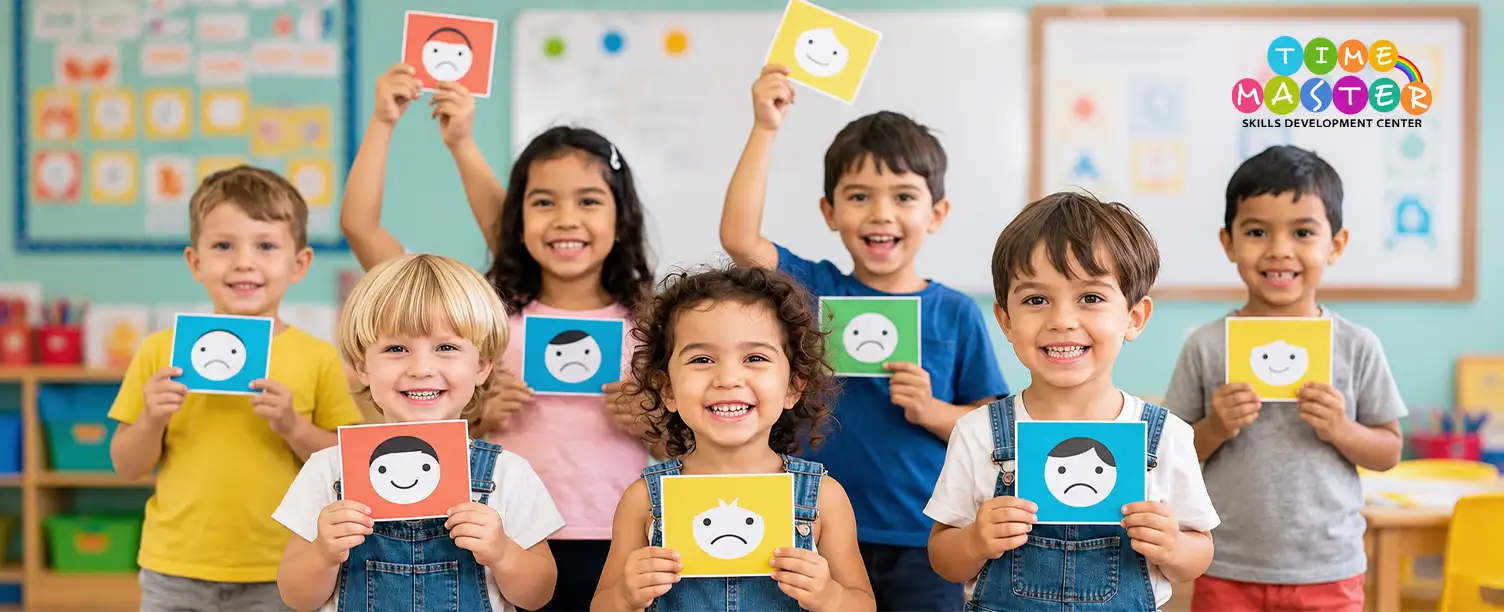
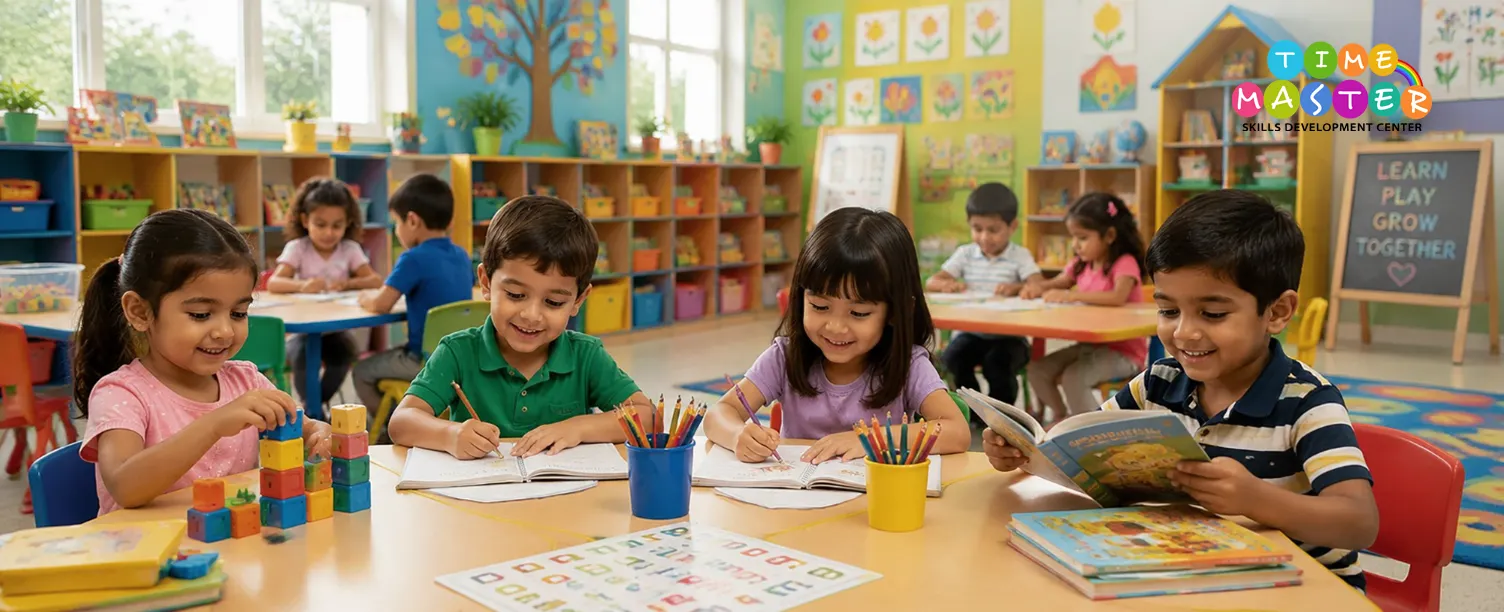
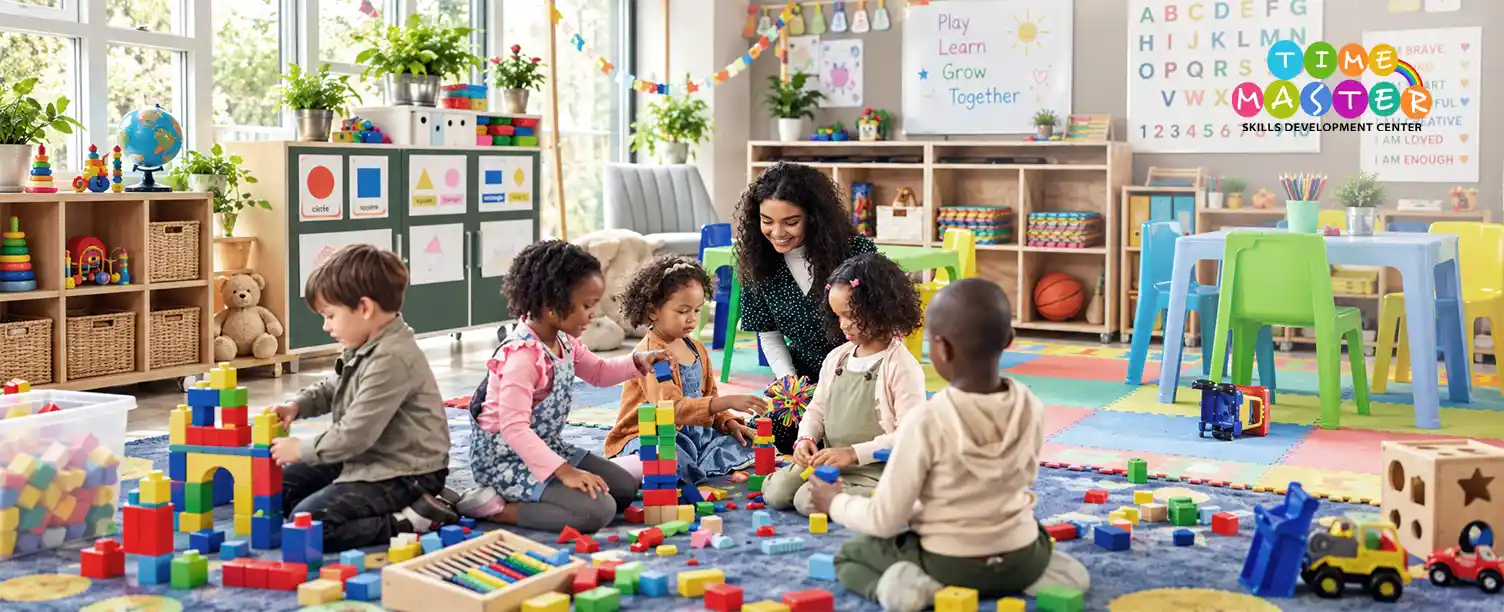
Abacus classes teach children to see numbers as beads they can move and picture. This helps them slow down, break a big problem into small steps, focus, and check their own work.
These are the same habits kids use to solve problems in maths and in daily life.
Let's try it right now! Hold up 3 fingers. Now hold up 2 more. How many do you see? Five! Say it out loud: "Three and two make five." Well done, little problem-solver. You just used your hands to find an answer.
An abacus works the same way, only with bright beads instead of fingers. Parents, you can try this with your child at the dinner table, in the car, or at bedtime.
This article discusses how abacus classes help kids solve problems with focus and confidence.
Table of Contents1. Imagine a Puzzle Made of Beads
2. What Is an Abacus?
3. What Does “Problem-Solving” Mean for a Child?
4. 6 Ways Abacus Classes Build Problem-Solving Skills
5. What Do Studies Say?
6. A Day in an Abacus Class
7. Abacus Certification: Why Levels Matter
7.1. Abacus Training in Abu Dhabi: What to Look For
7.2. How Teachers Use the Abacus to Teach Maths
7.3. Is an Abacus Class Enough on Its Own?
8. 7 Easy Ways to Help at Home
8.1. What Age Can Children Start?
9. Questions to Ask Before Choosing a Class
10. FAQs: Abacus Learning and Problem-Solving Skills
Imagine a Puzzle Made of Beads
Picture a little girl with a pile of colourful blocks. Her teacher says, "Can you make 12?" She tries. She moves a few blocks, counts, fixes one mistake, and smiles. She just solved a problem.
An abacus works the same way. It is a small frame with rows of beads. Each bead has a value. When a child moves the beads, the numbers become something she can touch and see.
Parents in Abu Dhabi often ask us one thing: "Will this really help my child think better?" Let's look at how it works, in simple words.
What Is an Abacus?
An abacus is one of the oldest counting tools in the world. It has:
-
A frame with rods
-
Beads that slide up and down
-
A middle bar that splits the beads into two groups
Each bead has a job. Move it up, and you add. Move it down, and you take away. That is all. Even a five-year-old can learn the first steps.
Want the full story on why parents love it? Read why abacus learning is important for children.
What Does "Problem-Solving" Mean for a Child?
Problem-solving is not only about sums. It means:
-
Understanding what the question is asking
-
Trying a plan
-
Fixing mistakes without giving up
-
Checking the answer
A child who can do these four things is ready for school, games, puzzles, and life.
6 Ways Abacus Classes Build Problem-Solving Skills
The top 6 ways abacus classes build problem-solving skills are:
-
Big problems become small steps
-
Children learn to focus
-
Hands and eyes work together
-
Kids picture numbers in their mind
-
Mistakes become normal
-
Confidence grows
1. Big problems become small steps
When a child adds 47 + 26, the abacus shows her how to do it one rod at a time: ones first, then tens. She learns that a scary problem is just a few easy steps in a row.
2. Children learn to focus
Beads need a calm hand and a quiet mind. Kids learn to look at one thing at a time. Better focus means fewer silly mistakes.
3. Hands and eyes work together
Children touch the numbers. Touching helps little brains remember. A child who has moved ten beads knows what "ten" really feels like.
4. Kids picture numbers in their mind
After some practice, children stop using the real abacus and picture one in their head. This is called mental abacus. They "see" the beads and move them in their imagination. Picturing a problem is a powerful skill for puzzles, shapes, and later for science.
5. Mistakes become normal
If a bead is in the wrong place, the child sees it straight away. She fixes it and moves on. Over time, mistakes stop feeling scary. They feel like a clue.
6. Confidence grows
Every solved sum is a small win. Many small wins build a child who says, "I can try this," instead of, "I can't do it."
To see how these skills grow with age, read what role abacus classes play in a child's development.
What Do Studies Say?
Parents like proof, so here is what researchers have found:
-
A study on ResearchGate (Barner and team, 2016) ran a controlled trial with schoolchildren in India. Kids who got mental abacus lessons improved in maths more than kids who did not. The researchers said the visual way of thinking was a big reason.
-
Research in the Journal of Experimental Psychology: General (Frank and Barner, 2012) showed that trained children can picture an abacus in their mind and use that picture to work with numbers quickly. The picture works like extra memory.
-
Brain studies on abacus users, including work using brain scans, suggest that these children use the parts of the brain linked to pictures and space, not only the parts linked to words (Tanaka S, Seki K et al., Abacus in the brain: a longitudinal functional MRI study of a skilled abacus user with a right hemispheric lesion. Frontiers in Psychology, 2012).
These studies are small compared with all of education, and results depend on good teaching and regular practice. Still, they point the same way: abacus helps children think in pictures, and pictures help solve problems.
A Day in an Abacus Class
What happens in a good abacus class? Here is a simple example:
-
Warm-up: finger and bead games, so little hands feel ready
-
Learn: the teacher shows one new idea, like adding 5
-
Practise: children try a few sums on their own abacus
-
Play: number games, races, and puzzles
-
Wrap-up: a quick check on what they learned
Classes stay short and fun, so children want to come back.
Abacus Certification: Why Levels Matter
Abacus learning moves in levels, like belts in karate. Each level adds a new idea. When a child finishes a level and passes a test, she earns a step on the ladder.
Many parents choose a course that offers abacus certification because it gives children a clear goal. Kids love saying, "I finished Level 2!" It also shows parents exactly where their child stands.
Abacus Training in Abu Dhabi: What to Look For
If you live in Abu Dhabi, you have a few choices. Look for a centre with:
-
Teachers who are kind and patient
-
Small groups, so each child gets attention
-
A clear plan from beginner to advanced
-
Fun activities, not only worksheets
-
Regular updates for parents
At Time Master, our abacus training in Abu Dhabi is made for young learners, with lessons that match their age and their pace.
How Teachers Use the Abacus to Teach Maths
A good teacher never rushes. She starts with counting, then adding, then taking away. Later come bigger numbers. Each step uses the beads first and the paper second.
Curious about the method? Here is a simple guide on how to use an abacus to teach kids maths.
Is an Abacus Class Enough on Its Own?
An abacus is a great start, but children learn best with support from many sides. Some children also enjoy extra one-to-one help with school maths.
Here are 5 benefits of having a maths tutor for your child, if you want to explore that too.
7 Easy Ways to Help at Home
You do not need to be a maths expert. Try these:
-
Practise a little every day: Ten minutes beats one long hour.
-
Ask: "How did you get that?" Let your child explain. Explaining builds thinking.
-
Play with numbers: Count steps, stairs, dates, and fruit at the shop.
-
Celebrate effort: Say, "I love how hard you tried," not only, "You got it right."
-
Let mistakes happen: Ask, "What could we try next?"
-
Use games: Card games, dominoes, and puzzles all help.
-
Keep it light: If your child is tired, stop and try again tomorrow.
For more ideas, here are 6 ways to improve your child's maths skills.
What Age Can Children Start?
Many children begin around age 5 or 6, when they can count and hold a pencil. Some centres take slightly younger or older kids. The best sign is not age but interest. If your child enjoys counting, sorting, and building, she is probably ready.
5 Questions to Ask Before Choosing a Class
Every child learns in a different way, so the best class is the one that suits yours. Ask any centre these questions:
-
How many children are in each group?
-
Does my child start with a real abacus before mental maths?
-
How will I know my child is improving?
-
Are the lessons short and playful for little ones?
-
Is there a clear level plan, with certification at the end?
Warm, clear answers are a good sign. You can also visit Time Master in Abu Dhabi, meet the teachers, and watch a class before you decide.
FAQ's