A tower of blocks falls. Your child stares at the mess. Then they pick up one block and start again.
That small moment holds a big lesson. Your child just practised patience, problem-solving, and courage. No worksheet did that. A simple activity did.
The right skill development activities for students work like that. They feel like play. But they build skills for life.
This article shares seven easy activities. Parents can try them at home. Kids will enjoy them.
Table of Contents1. What are Skill Development Activities for Students?
2. Why Do Skills Matter More Than Ever for Kids?
3. What are the Best Skill Development Activities for Students?
3.1. The Story Circle: Where Little Voices Get Big
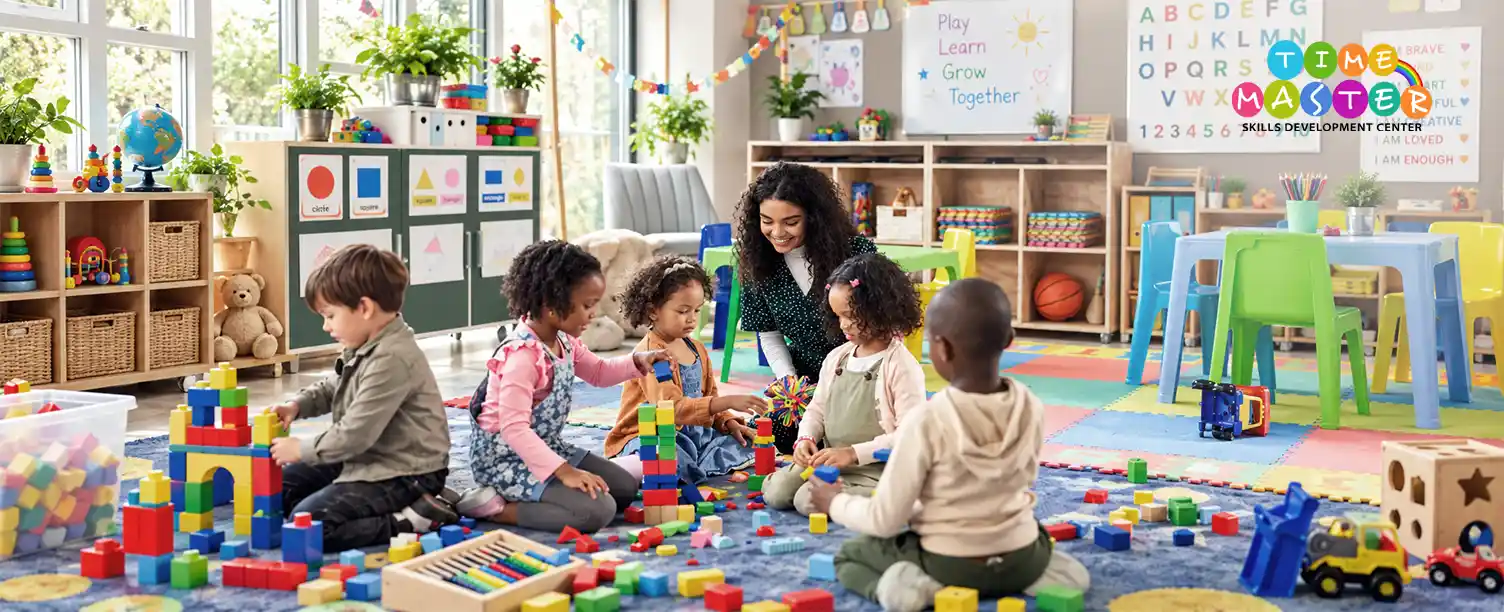
3.2. The Block Tower Challenge: Falling Down, Standing Up
3.3. The Big Team Puzzle: Many Hands, One Picture
3.4. The Paintbrush Lab: Messy Minds Make New Ideas
3.5. The Pretend Shop: Little Leaders at Work
3.6. The Tiny Hands Workshop: Small Fingers, Big Skills
3.7. The Feelings Corner: Naming Big Emotions
4. What Do Abu Dhabi Experts Say About Building Skills Early?
5. How Can Parents Turn Everyday Moments Into Skill Practice?
6. How Do You Choose the Right Activity for Your Child?
6.1. Where Can Children Build These Skills in Abu Dhabi?
7. FAQs: Top 7 Skill Development Activities for Students
What are Skill Development Activities for Students?
Skill development activities are fun tasks that help children practise skills like talking, thinking, sharing, and staying calm. Kids learn by doing, not by listening.
These are student development activities that build the whole child. Think of them as gym workouts for the brain and heart.
Good activities help with:
-
Communication skills
-
Teamwork skills
-
Problem-solving skills
-
Creativity and confidence
Want the basics first? Read what skill development is and how your kids can learn it.
Why Do Skills Matter More Than Ever for Kids?
Skills help children cope with change. Marks matter, but skills stay with them for life.
The World Economic Forum's Future of Jobs Report 2025 found that about 39% of workers' core skills will change by 2030. Analytical thinking ranked among the top skills employers want.
Abu Dhabi is moving the same way. The Abu Dhabi Department of Education and Knowledge (ADEK) recently named future-ready skills and life readiness as key priorities. Its summer enrichment programmes also reached more than 1,300 students across Abu Dhabi and Al Ain.
The message is simple. Skills need to start early. If your child needs a little guided practice, Kids Skill Development Courses in Abu Dhabi give them a friendly space to try these skills with other children.
What are the Best Skill Development Activities for Students?
The best activities are simple, hands-on, and fun. Storytelling, building, team games, art, role play, sorting tasks, and listening games all work well.
Here are seven skill-building activities for students to try.
1. The Story Circle: Where Little Voices Get Big
Story circles build confidence and communication skills.
Sit together. One person starts a story with one sentence. The next person adds another. Keep going.
Why it works:
-
Kids practise speaking clearly
-
They learn to wait for their turn
-
They learn to listen to others
Try it at dinner. Keep it light and silly.
Listening is half of talking. Here are 7 types of listening skills your kids need to learn.
2. The Block Tower Challenge: Falling Down, Standing Up
Building games teach problem-solving and patience.
Give your child blocks, cups, or cardboard boxes. Ask them to build the tallest tower they can.
It will fall. That is the point.
Ask simple questions:
-
What can we change?
-
Which block should go at the bottom?
-
What will you try next?
This is one of the best activities to improve problem-solving skills in students. It also teaches them that mistakes are not the end. Building also feeds imagination, and these proven ways to develop creative thinking skills in children pair well with it.
3. The Big Team Puzzle: Many Hands, One Picture
Group puzzles teach teamwork and sharing.
Pick a large puzzle. Let two or three children work on it together.
Watch what happens. Someone finds the corners. Someone sorts the colours. Someone cheers.
Good teamwork activities teach kids to:
-
Share tasks
-
Ask for help
-
Celebrate together
4. The Paintbrush Lab: Messy Minds Make New Ideas
Art and craft activities build creativity and imagination.
Set out paper, paint, leaves, and old boxes. Do not show a finished example. Let your child decide.
There is no wrong answer. That freedom builds confidence.
Creative play also builds important habits. Learn more in 8 essential life skills to equip your child for the real world.
5. The Pretend Shop: Little Leaders at Work
Role play builds leadership, decision-making, and social skills.
Turn your living room into a shop, clinic, or café. Let your child be the boss.
They will:
-
Make choices
-
Share the jobs
-
Talk politely with "customers"
-
Solve small problems, like "we ran out of apples"
This is a gentle way to build leadership skills and interpersonal skills.
6. The Tiny Hands Workshop: Small Fingers, Big Skills
Fine motor activities help children write, draw, and focus.
Try threading beads, tearing paper, using tongs, or moulding clay. These games strengthen small hand muscles.
Strong hands help with writing. They also build focus and patience.
Here are 8 activities to develop fine motor skills in your kids.
7. The Feelings Corner: Naming Big Emotions
Talking about feelings builds emotional intelligence and calm.
Make a small "feelings chart" with faces: happy, sad, angry, scared, excited. Each day, ask your child to point to how they feel.
Then ask, "What helped?"
This builds social-emotional learning and helps kids handle frustration. It is one of the most useful life skills activities for students.
What Do Abu Dhabi Experts Say About Building Skills Early?
Local leaders agree that early, practical learning builds confidence, communication and resilience.
Here is what Abu Dhabi voices have shared recently.
-
Hanan Juma Alrayssi, Acting Executive Director of the Counselling and Integration Sector at Abu Dhabi's Family Care Authority, said developing life skills from an early age helps children build confidence and get ready for different challenges.
-
Dr Omar Al Dhaheri, Assistant Undersecretary for School Operations at the Ministry of Education – Abu Dhabi, said life skills are an important part of a child's overall education. He added that practical experiences help students express their opinions with more confidence.
-
Michael Connor, founding head of primary at Nord Anglia International School Abu Dhabi, explained to The National that early-years lessons focus on play and critical thinking. In his words, "there is no screen time."
The pattern is clear. Play, practice and real-life tasks work.
Some parents add guided practice to home play. Child Development Courses in Abu Dhabi are one way to do that, with trained teachers and other children to learn alongside.
How Can Parents Turn Everyday Moments Into Skill Practice?
Use small daily routines. Cooking, tidying, shopping, and chatting all build skills.
You do not need special tools. Try these:
-
Let your child help measure ingredients (maths and following steps)
-
Ask them to plan the family outing (decision-making)
-
Give them one small job daily (responsibility)
-
Ask "what do you think?" before giving the answer (critical thinking)
-
Limit screens and add one hands-on game
Keep sessions short. Ten to fifteen minutes is enough for younger children.
How Do You Choose the Right Activity for Your Child?
Match the activity to your child's age, mood, and interests. Start small and keep it fun.
Use this simple guide:
Choose the Right Skill-Building Activity for Your Child
| If your child is... | Try this |
|---|---|
| Shy | Story Circle |
| Energetic | Block Tower or Pretend Shop |
| Easily frustrated | Feelings Corner |
| Creative | Paintbrush Lab |
| Learning to write | Tiny Hands Workshop |
| Struggling to share | Big Team Puzzle |
Never force it. If your child loses interest, switch. Joy comes first.
Where Can Children Build These Skills in Abu Dhabi?
Look for programmes that teach through play, group work and real-life practice.
Home is a great start. If you want more structure, a skill development course in Abu Dhabi can help your child practise communication, teamwork and confidence with trained teachers.
Skills grow through small, happy moments. A fallen tower. A silly story. A shared puzzle.
Pick one activity from this list. Try it this week. Watch what your child does next.
That is where skill development activities for students begin. Not in a big plan. In a simple, playful try.
FAQ's