Preschools handle separation anxiety through short, predictable goodbye routines, familiar comfort objects, warm teacher bonding, and a calm, play-based classroom that gives children something better to do than worry. Most children settle within two to four weeks.
Your child is holding your leg like it's the last tree in a storm. You're already late. The teacher is smiling, but you're not sure if that smile means "I've got this" or "please leave before this gets worse."
If this is you, take a breath.
Separation anxiety in preschoolers is not a parenting failure. It's not a sign your child hates school. It's biology doing its job, and it's far more common than most first-time parents realise.
Let's talk about what's actually happening, what good preschools do about it, and what you can do at home, without the guesswork.
Table Of Content
1. What is separation anxiety in children and why does it happen?
2. Why do some children have more separation anxiety than others?
3. How can preschools help children with separation anxiety?
4. How long does separation anxiety last in children?
5. How can parents prepare children for the first day of preschool?
5.1 What mistakes should parents avoid when managing separation anxiety?
6. How to build independence in children without rushing them?
7. How to choose a preschool in Abu Dhabi that supports your child?
What is Separation Anxiety in Children and Why Does It Happen?
Separation anxiety is a child's very reasonable fear of losing the person who keeps them safe.
It usually appears between 8 months and 3 years, and it often resurfaces hard when preschool starts, because preschool is the first time a child is expected to trust a stranger with something precious: themselves.
A 2025 study in the Konuralp Medical Journal found separation anxiety symptoms in 12% of preschool-aged children, slightly higher in boys (13.7%) than girls (10.5%).
The same research also found a child's anxiety often mirrors a parent's own anxiety about separation, which explains why some drop-offs are harder on the adult than the child.
Other research puts general anxiety prevalence in early childhood between 10% and 20%. This makes anxiety one of the most common emotional experiences during the preschool years.
It is not a rare problem and does not mean something is wrong with your child.
- Dr Wendy Sue Swanson, MD, MBE, FAAP
How Common Is Separation Anxiety in Children? Key Statistics
| Finding | What the Research Says |
|---|---|
| Children showing separation anxiety symptoms | 12% of preschoolers |
| Early childhood anxiety prevalence overall | 10–20% of children |
| Children who largely outgrow it by age 4–5 | The majority, per long-term tracking studies |
| Children where anxiety persists | A small, identifiable group worth flagging to teachers early |
The takeaway: most separation anxiety fades on its own with the right support. It's a phase, not a flaw.
Why Do Some Children Have More Separation Anxiety Than Others?
No two children process separation the same way, and that's completely normal. A few things shape how hard drop-off hits:
- Temperament: Cautious, sensitive children often need more warm-up time in new environments.
- Past Experience: A child who's already spent time with grandparents or a nanny knows "goodbye" isn't forever.
- Home routine: Chaotic mornings feed anxious goodbyes. Predictable ones calm them.
- Parental energy: Children read faces before they read words. If you look worried, they will be too.
None of this means a child is "too sensitive" for preschool. It means the transition needs a plan.
How Can Preschools Help Children With Separation Anxiety?
This is where the right early learning centre in Abu Dhabi makes all the difference. Preschool separation anxiety isn't handled by ignoring the tears; it's handled by designing the classroom and the routine around them.
Some of the proven ways preschools in Abu Dhabi take to help children with separation anxiety are the following:
-
The two-minute goodbye rule
-
A soft landing, not a cold room
-
Comfort objects are welcomed, not banned
-
Predictable, visual routines
-
Play-based learning as a distraction
-
Teachers who track, not just soothe
1. The Two-Minute Goodbye Rule
Preschool teachers are trained to keep goodbyes short, warm, and confident. A long, hesitant goodbye tells a toddler's brain that something is genuinely wrong. A short, cheerful one tells the brain the opposite.
2. A Soft Landing, Not a Cold Room
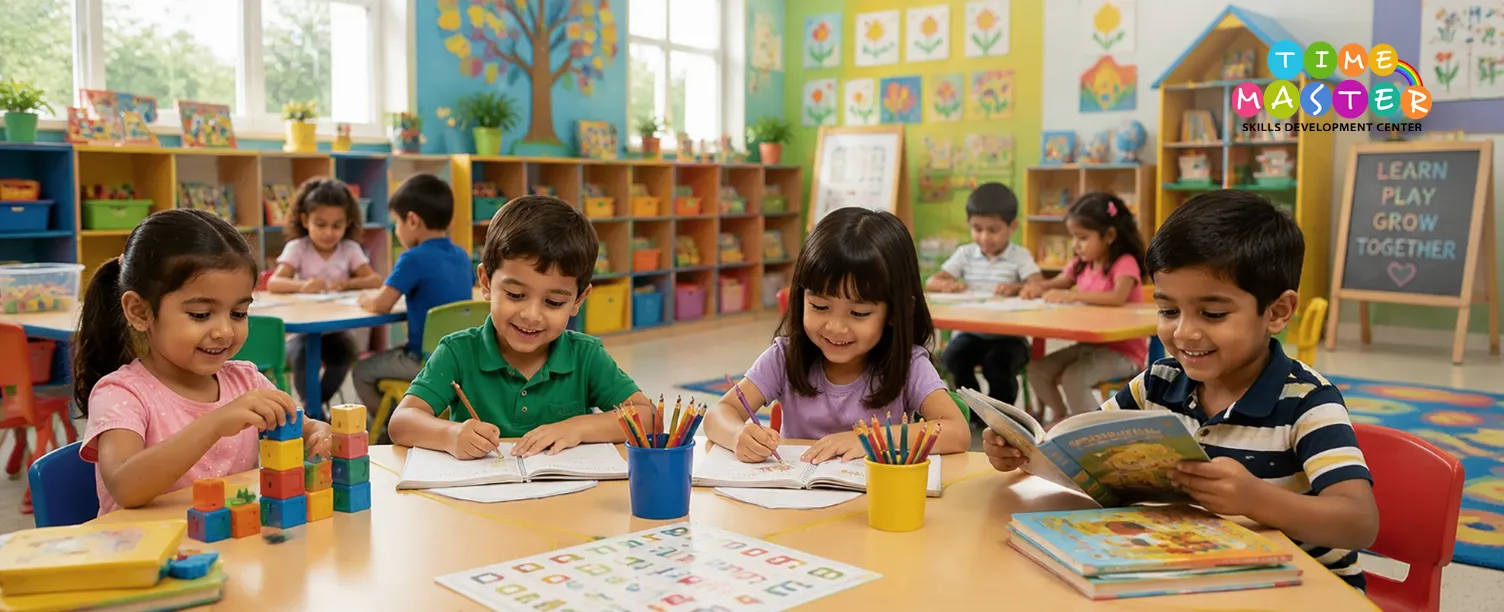
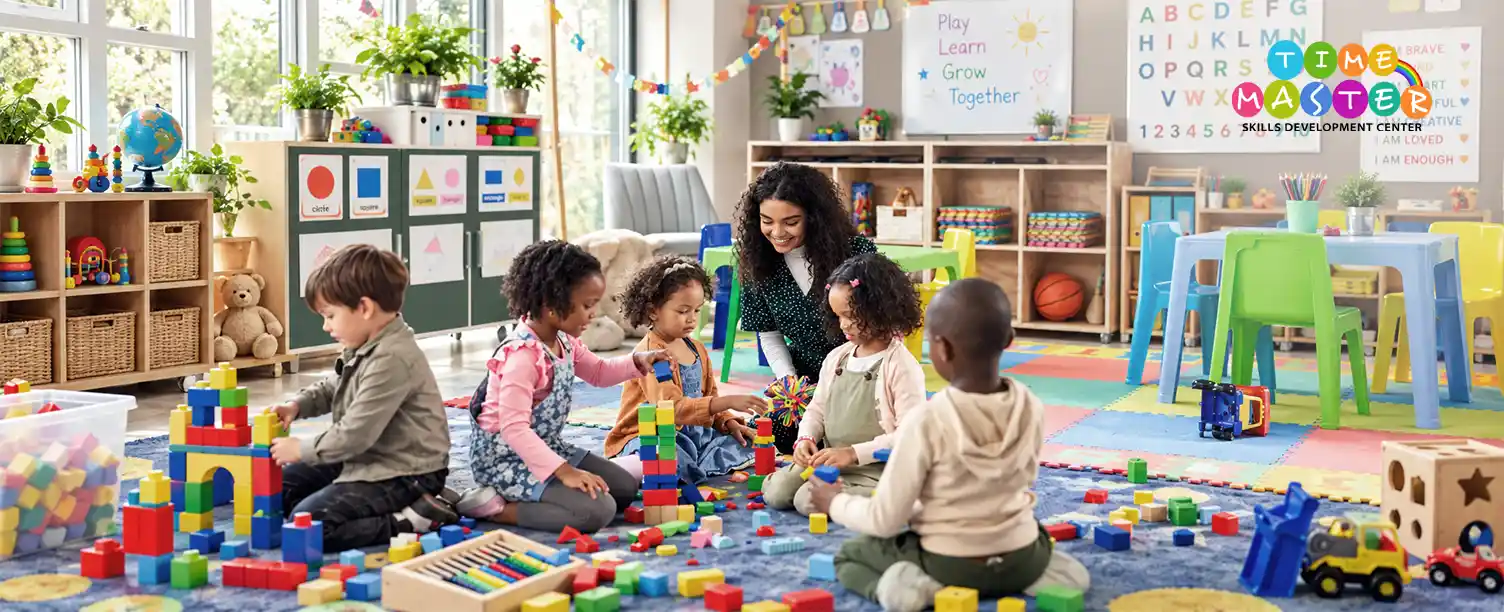
Good preschool teacher support looks like a familiar face waiting at the door, a favourite toy already out, or a small "job" ready for the child the moment they walk in, like watering a plant or handing out name cards. Busy hands calm anxious minds.
3. Comfort Objects Are Welcomed, Not Banned
A small toy from home, a family photo tucked in a bag, or even a parent's scarf can work like an emotional anchor. Most quality preschools actively encourage this in the first few weeks rather than discouraging it.
4. Predictable, Visual Routines
Preschoolers can't read a clock, but they can read a picture schedule. Knowing "circle time, then snack, then outdoor play, then home time" gives a child a map through the day, and a clear sense of when parents return.
5. Play-Based Learning as a Distraction
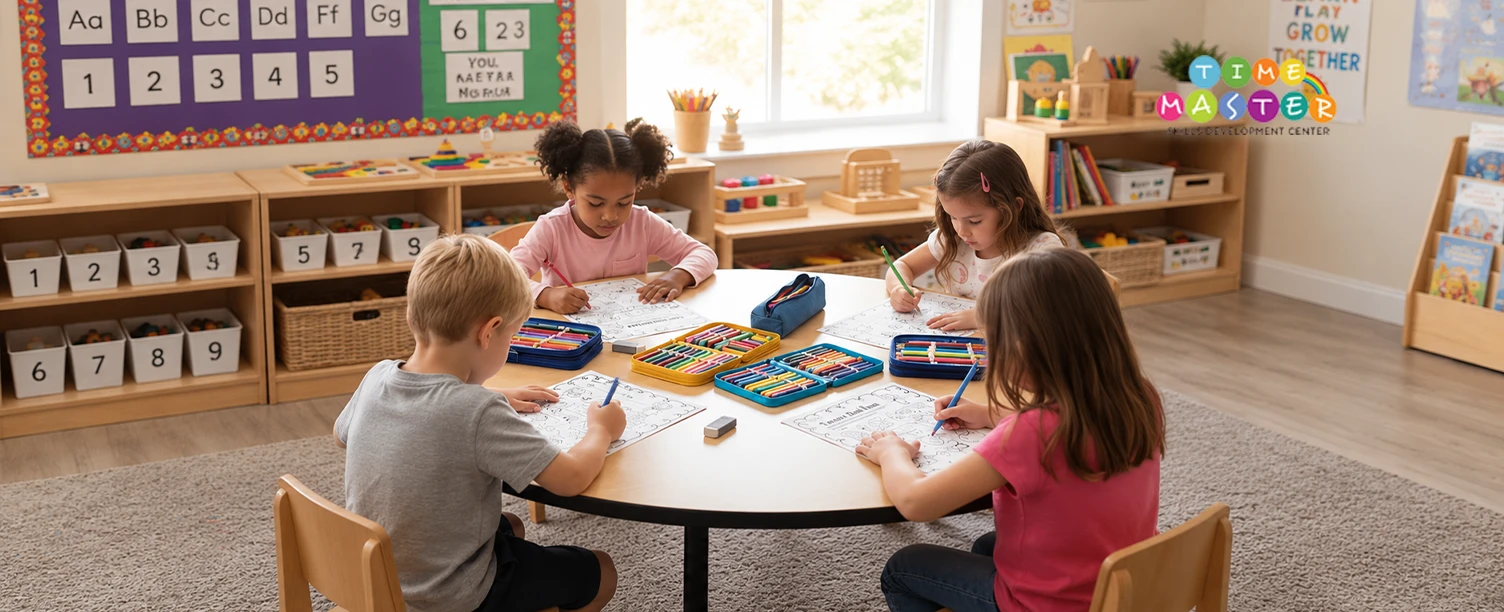
This is the quiet genius of play-based learning: a child absorbed in sand, blocks, or a puppet show has less bandwidth left for worry. Good early childhood education doesn't fight anxiety head-on; it gently out-competes it with joy.
Curious about what this actually looks like day to day? Our guide to the best preschool activities for children in Abu Dhabi breaks down exactly the kind of play that keeps little minds engaged and anxious ones calm.
6. Teachers Who Track, Not Just Soothe
Experienced teachers watch for patterns. A child who settles by 9:15 am every day is different from one still distressed at noon. The first is normal adjustment. The second gets a conversation with parents and, if needed, a more gradual settling plan.
How Long Does Separation Anxiety Last in Children?
Here's the honest version, based on what most early childhood education specialists observe:
How Long Does Separation Anxiety Last? A Week-by-Week Guide
| Timeline | What to Expect |
|---|---|
| Days 1–5 | Tears at drop-off, clinginess, may ask to go home |
| Week 2 | Crying shortens, child engages faster once settled |
| Weeks 3–4 | Most children walk in with minimal fuss |
| Beyond 6 weeks with no change | Worth a conversation with the teacher or a paediatrician |
If your child is still distressed well past a month, that's not failure either; it's information. Some children genuinely need a slower, staged transition, and a good preschool will work with you on one.
How Can Parents Prepare Children for the First Day of Preschool?
Preparing a child for preschool starts weeks before term begins, not on the morning itself.
- Practise short separations early; a couple of hours with a grandparent or trusted friend builds the "goodbye isn't forever" muscle.
- Talk about preschool positively and often using simple, concrete language: "You'll paint, play outside, and I'll pick you up after lunch."
- Visit the preschool together before the first day, so the space isn't a total unknown.
- Keep goodbyes short on day one even though every instinct says linger.
- Stick to routines at home during the transition; this is not the week to change bedtime.
If you want a fuller roadmap beyond the basics below, our detailed piece on what you can do to prepare a child for preschool walks through the weeks leading up to day one in more depth.
What Mistakes Should Parents Avoid When Managing Separation Anxiety?
Parents should avoid the following mistakes when managing separation anxiety in children:
- Sneaking out without saying goodbye; it erodes trust fast.
- Promising to "stay and watch," then leaving anyway.
- Asking anxious questions right before drop-off.
- Comparing your child to siblings or classmates who "settled instantly."
If you're still deciding whether the investment in a strong early years programme is worth it, it's worth understanding why choosing a high-quality preschool matters so much for how your child settles, learns, and grows.
How to Build Independence in Children Without Rushing Them?
Separation anxiety, handled well, isn't just survived; it becomes a child's first real lesson in independence.
Every calm drop-off is a small deposit of confidence:
“I can be okay without my parent close by, and they always come back.”
That's a life skill, not just a preschool milestone.
This is exactly why the preschool environment matters so much. A warm, structured, child-centred learning space does more than fill hours; it builds the emotional foundation for school readiness later on.
This is really just one piece of a much bigger picture, and if you're weighing why any of this matters in the first place, it's worth reading about the importance of preschool education and the seven ways it shapes a child well beyond the toddler years.
How to Choose a Preschool in Abu Dhabi That Supports Your Child
For families searching for a preschool in Abu Dhabi or a preschool in Mussafah, separation anxiety support is worth asking about directly during your tour. Good questions to ask:
- How do teachers handle the first two weeks of drop-off?
- Is there a settling-in period before full days start?
- Can my child bring a comfort item?
- How do teachers communicate daily updates to parents?
An early learning centre in Abu Dhabi that answers these clearly, rather than vaguely, is usually one that has thought seriously about a child's emotional development, not just academics.
Separation anxiety in children isn't a hurdle to eliminate. It's a phase to walk through together, with patience on both sides of the classroom door.
Not every preschool handles this the same way, and the difference usually comes down to quality. Our breakdown of the top features of a high-quality preschool is a useful checklist to bring along on your tours.
The preschools that do this well aren't the ones with zero tears on day one; they're the ones with a plan for every single one of them.
FAQ's