Early childhood education supports brain development by giving children structured, repeated, and playful experiences during the years when their brains form connections the fastest.
Between birth and age five, a child's brain reaches close to 90% of its adult volume, and quality early learning environments help shape how strong and useful those connections become.
Ever watched your three-year-old stack blocks into a wobbly tower, knock it down, and immediately start rebuilding it? That's not just play. That's your child's brain wiring itself, connection by connection, right in front of you.
If you're a parent in Abu Dhabi or Mussafah wondering whether preschool really "does" anything for your little one besides keeping them busy, you're asking exactly the right question. Let's answer it simply, honestly, and without the jargon
| Table of Contents
1. Why Are the First Five Years So Important for a Child's Development? |
Why Are the First Five Years So Important for a Child's Development?
Here's something most parents don't realise until someone tells them straight: your child's brain isn't a smaller version of an adult brain waiting to catch up. It's under active construction, and the early years are the busiest building season it will ever have.
According to the Centre on the Developing Child at Harvard University, more than one million new neural connections form every second during the first few years of life, and the brain grows to about 80% of adult size by age three and close to 90% by age five.
That's an extraordinary pace of growth, and it doesn't happen automatically in a vacuum.
The quality of a child's everyday experiences shapes how their brain develops, with lasting effects on learning and life.
This is exactly why early years learning matters so much. It's a narrow window when the right kind of care, warmth, and everyday stimulation can genuinely reshape how a child's mind develops for years to come.
For a deeper look at the research and reasoning behind this, read our post on the importance of preschool education, where we cover seven compelling reasons parents shouldn't skip this stage.
What Are the Brain Development Benefits of Early Childhood Education?
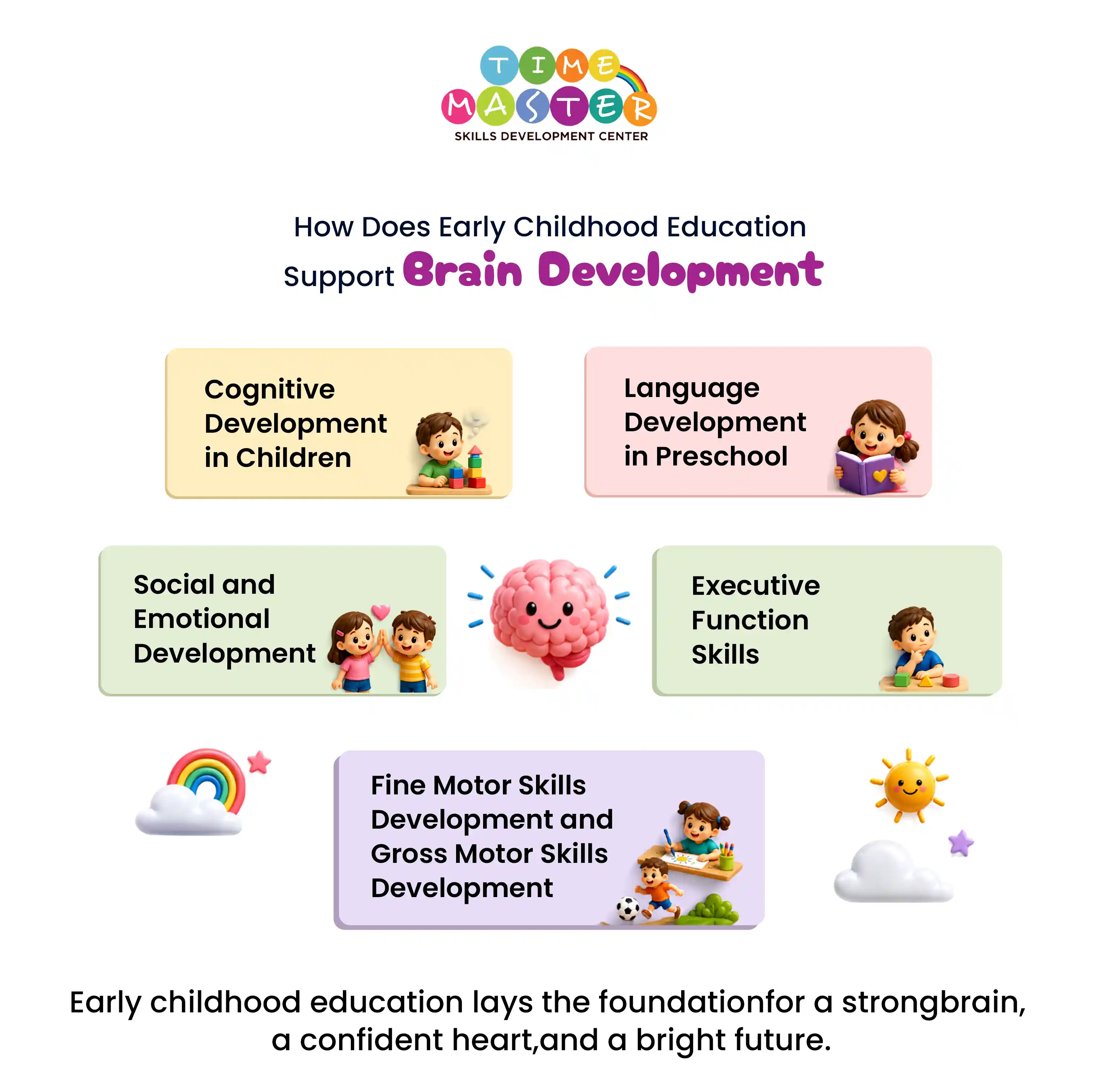
Here is what an Early Childhood Education in Abu Dhabi actually do for brain development in a child:
-
Cognitive development in children
-
Language development in preschool
-
Social and emotional development
-
Executive function skills
-
Fine motor skills development and gross motor skills development
Cognitive Development in Children
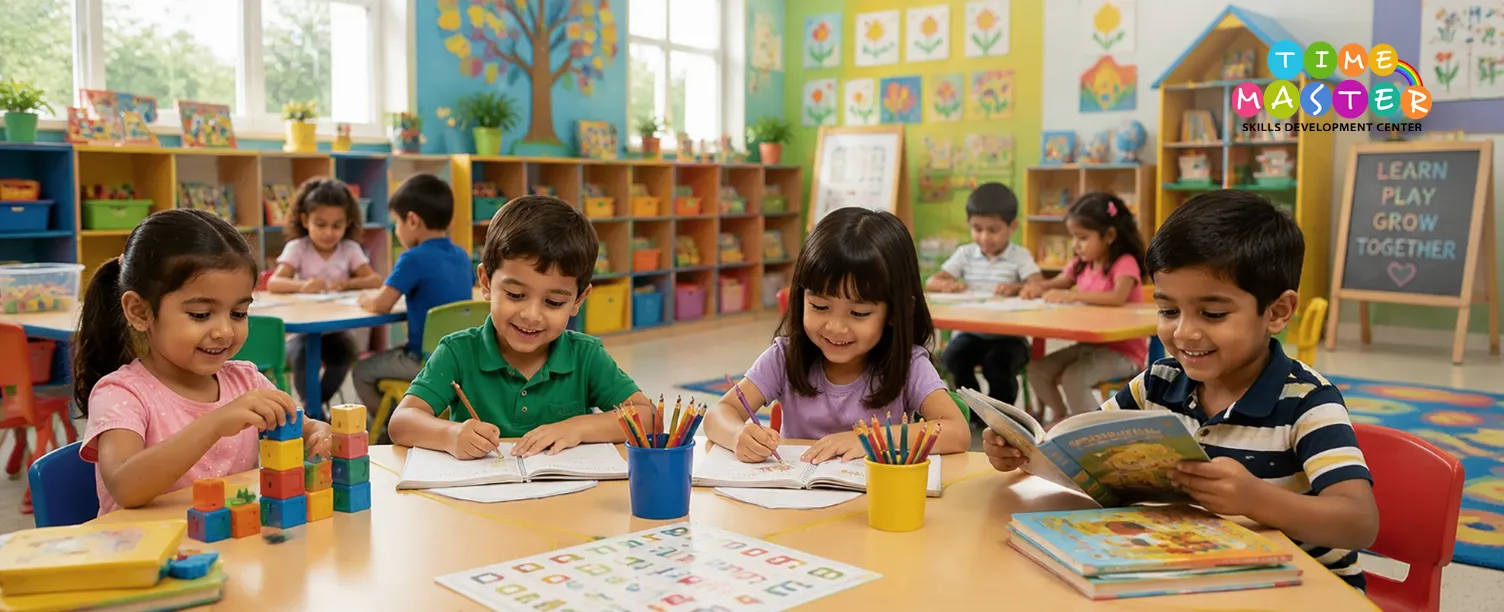
The best preschool activities for children in Abu Dhabi include sorting shapes, counting snacks, or solving simple puzzles aren't random busywork. They train the brain to recognise patterns, hold information, and problem-solve, the foundation of every subject your child will study later.
According to UNICEF, the first 1,000 days of life are a critical window for brain development, where nurturing care, responsive interactions, and early learning lay the foundation for lifelong health and learning.
What makes preschool especially powerful here is repetition with variety. A child doesn't just sort shapes once; they sort shapes, then colours, then sizes, then textures, over weeks and months.
That repeated practice, in slightly different forms, is exactly how the brain turns a new skill into a lasting one.
How Does Play-Based Learning Support Early Childhood Development?
Play-based learning supports early childhood development by helping children build cognitive, language, social, emotional, and motor skills through hands-on exploration and meaningful interactions.
For a young child, play is learning as:
- Play-based learning lets children experiment safely, make mistakes, try again, and build confidence without pressure.
- A child pretending to run a "shop" is practising counting, negotiation, and vocabulary all at once.
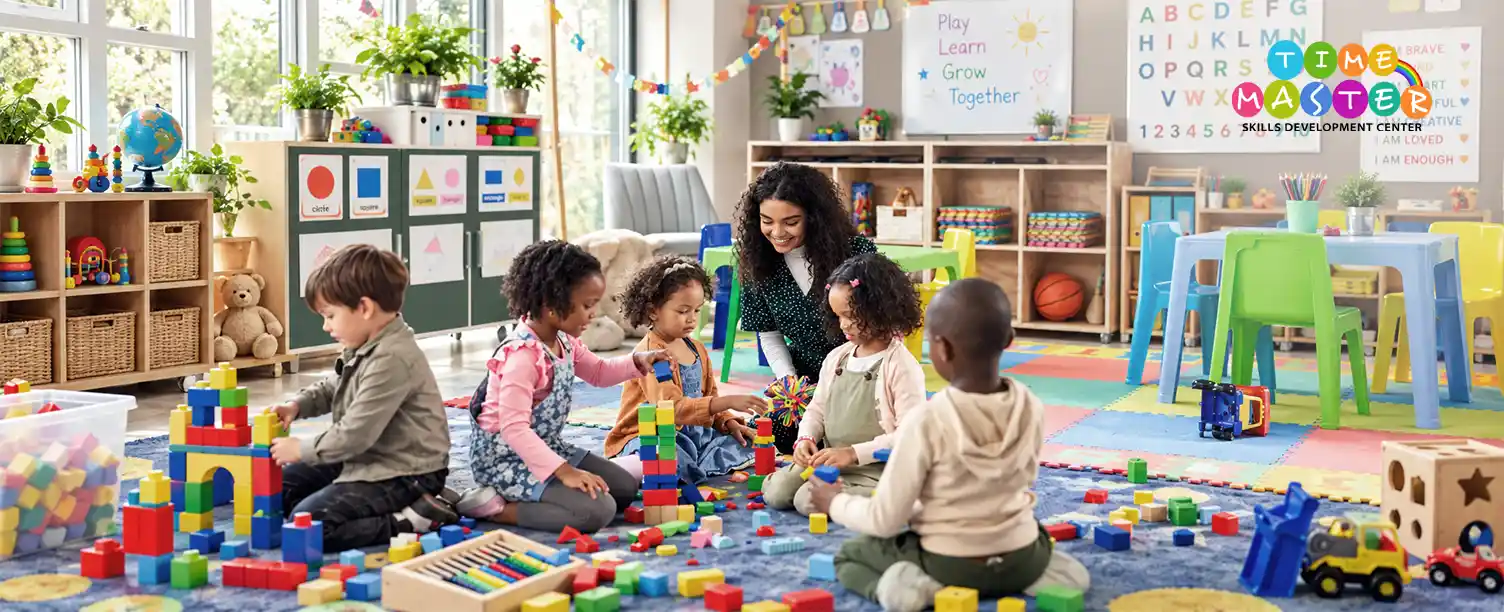
- A child building with blocks is exploring balance, cause and effect, and spatial reasoning.
- This is why the best preschool curriculum in Abu Dhabi blends structured learning goals with plenty of open-ended, child-led play.
If you're curious about what sets a great early years setting apart, our guide to the top 5 features of a high-quality preschool breaks down exactly what to look for.
2. Language Development in Preschool
Every conversation, story time, and rhyme your child hears builds vocabulary and comprehension.
Children in language-rich preschool environments tend to enter primary school with stronger reading readiness, because their brains have had thousands of extra hours of exposure to spoken and written words.
A three-year-old in a language-rich classroom might hear and use hundreds of new words in a single week, through storytelling, singing, show-and-tell, and simple back-and-forth chats with teachers and classmates.
Language development matters because language isn't just about talking; it's tightly linked to how children think and organise ideas.
Thus, it is important to choose a high-quality preschool for your kids in Abu Dhabi.
How Do Sensory and Creative Learning Activities Support Preschoolers?
Sensory learning activities, such as sand, water, textured materials, and messy art, stimulate multiple areas of the brain simultaneously.
When a child touches, smells, and manipulates materials, they're building neural pathways far faster than through passive activities like screen time.
Creative learning for preschoolers, such as music, dance, dramatic play, and art, also strengthens the connections between the brain's logical and emotional centres.
This is part of why a rich, varied preschool learning environment produces more well-rounded child development outcomes than a purely academic one.
A language course helps children build communication skills, boosts career opportunities, and opens doors to global experiences
3. Social and Emotional Development
Sharing a toy, waiting for a turn, comforting a crying classmate. These small daily moments teach empathy, patience, and self-regulation.
A quality preschool learning environment gives children safe, repeated practice at managing big feelings in a small body.
Think about what actually happens during a typical preschool morning.
A disagreement over a toy is resolved with a teacher's gentle guidance. A shy child is encouraged to join a group game.
A frustrated toddler learns to say "I need help" instead of throwing a tantrum.
These everyday moments help children build communication, emotional regulation, problem-solving, and social skills that support lifelong learning.
These moments, repeated daily across a school year, build emotional vocabulary, help with confidence-building and resilience.
Children who get this consistent practice tend to handle disappointment, transitions, and group settings with far more ease once they reach primary school.
How Does Early Childhood Education Prepare Children for School and Long-Term Success?
Parents often ask, "Will preschool really help my child do better in 'real' school later?" The honest answer is yes, and it's not just about ABCs and 123s.
School readiness is about a child who can sit, focus, follow instructions, manage disappointment, and get along with others.
These are executive function and social-emotional skills built through years of consistent early learning, not switched on overnight in kindergarten.
Not sure where to start? Our step-by-step guide on how to prepare your child for preschool walks you through the transition, from routines to emotional readiness.
4. Executive Function Skills
Executive function is the brain's "management system": the ability to focus, remember instructions, and control impulses.
Preschool routines, like following a morning circle or transitioning between activities, quietly train this system every single day.
What's interesting is that executive function is one of the strongest predictors of later academic success, sometimes even more than early literacy or numeracy skills.
A structured but flexible preschool day, one with clear routines but also room for choice, gives children thousands of small opportunities to practise self-control, planning, and working memory long before they ever sit a formal exam.
5. Fine Motor Skills Development and Gross Motor Skills Development
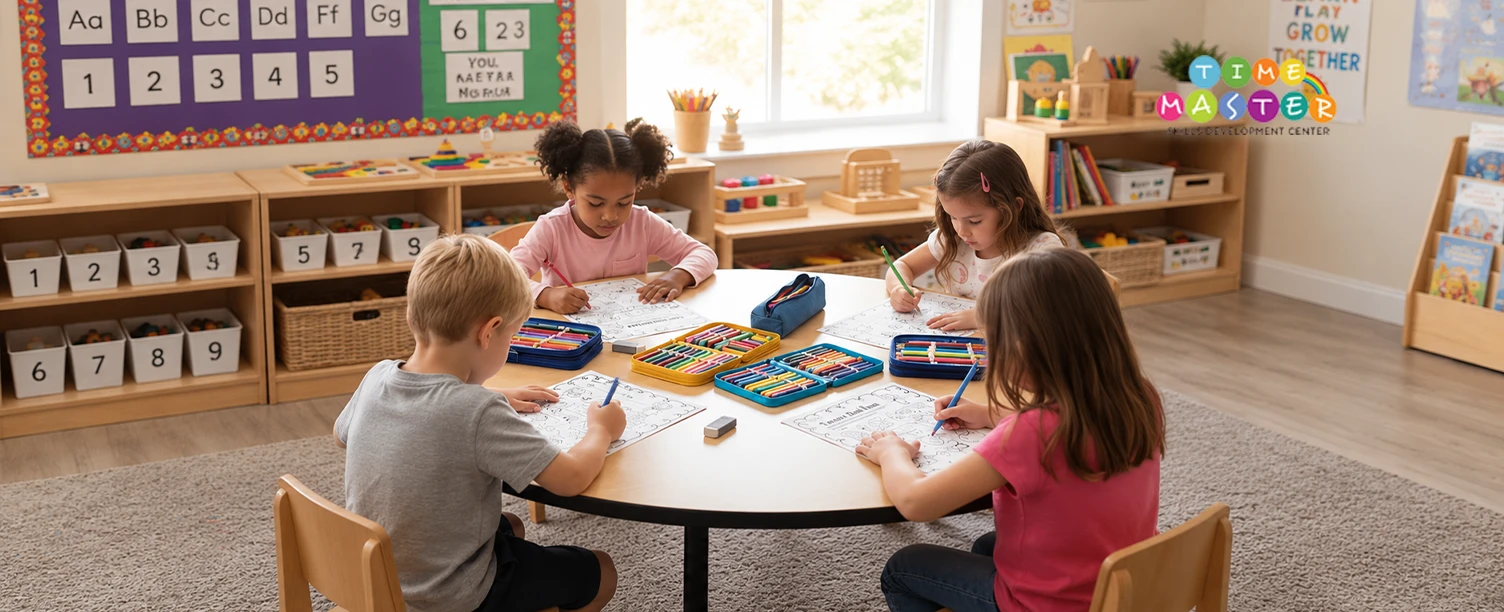
Threading beads, holding crayons, and cutting with safety scissors build fine motor skills. Running, climbing, and balancing during outdoor play build gross motor skills.
Both are directly linked to brain development, since movement and coordination are processed in the same brain regions used for concentration and learning.
This is why a child who struggles to sit still isn't necessarily being difficult; sometimes they simply need more movement-based activity to help their brain settle and focus.
A preschool that balances table-top fine motor tasks with plenty of active outdoor play is supporting both physical coordination and cognitive readiness at the same time.
How early childhood education supports brain development is presented in the infographics below:
What Are the Key Brain Development Milestones from Birth to Age Five?
The key brain development milestones from birth to age five are listed in the table below:
Brain Development Milestones: What to Expect at Each Stage
| Age Range | Typical Child Development Milestones | How Preschool Supports This |
|---|---|---|
| 1-2 years | First words, basic walking, object exploration | Sensory play, songs, guided movement |
| 2-3 years | Two-word sentences, simple problem-solving, parallel play | Vocabulary-building, puzzles, group activities |
| 3-4 years | Full sentences, sharing, following instructions | Circle time, cooperative games, storytelling |
| 4-5 years | Complex reasoning, early literacy and numeracy, emotional regulation | Structured curriculum, pre-reading and pre-maths activities |
| 5-6 years | School readiness, independent thinking, longer attention span | Transition programmes, structured routines, group projects |
(Every child develops at their own pace. This table is a general guide, not a strict checklist.)
How Can the Right Early Childhood Education Environment in Abu Dhabi Support Your Child's Development?
Choosing a preschool in Abu Dhabi or a preschool in Mussafah isn't just about convenience or proximity. It's about finding a preschool learning environment where your child's brain gets consistent, high-quality input every single day.
Look for an early learning centre in Abu Dhabi that offers:
- A balanced preschool curriculum combining play-based and structured learning
- Low child-to-teacher ratios for individual attention
- Trained early years educators who understand child development milestones
- Safe, engaging spaces for sensory and creative learning activities
- Clear communication with parents about your child's progress
This is exactly the kind of environment quality early childhood education is built around: one where brain development in early childhood is supported intentionally, not left to chance.
FAQ's