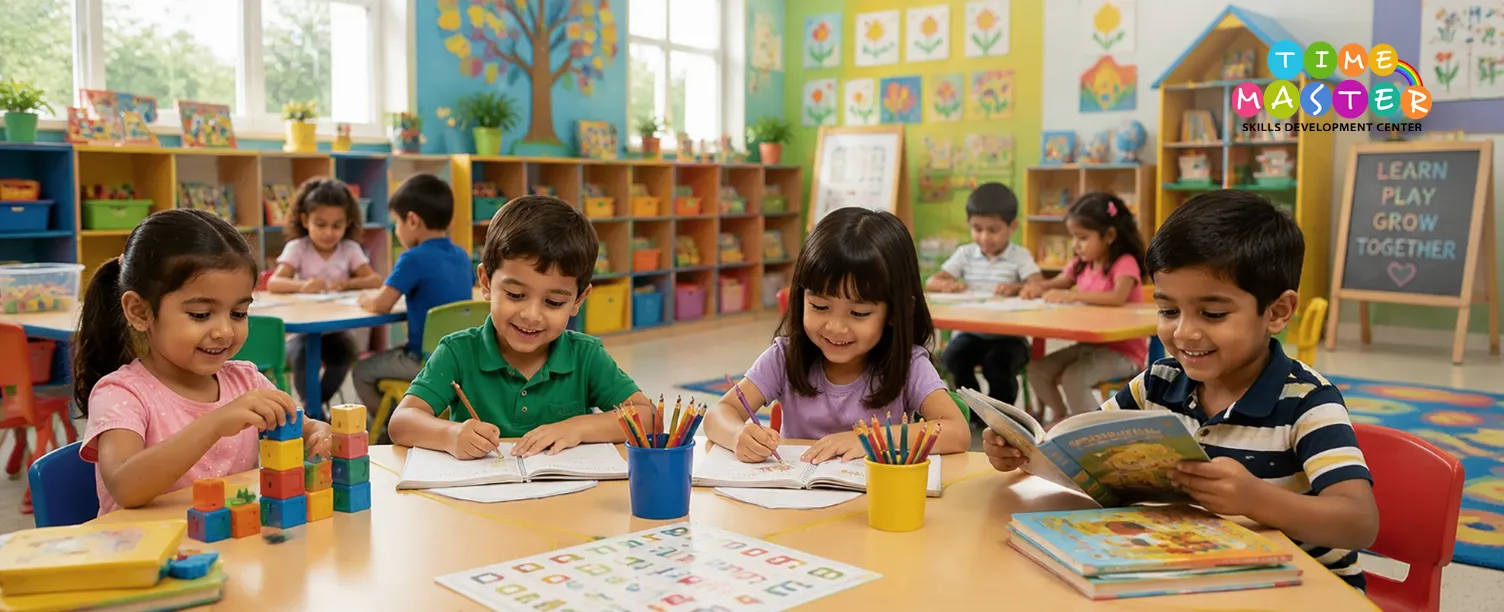
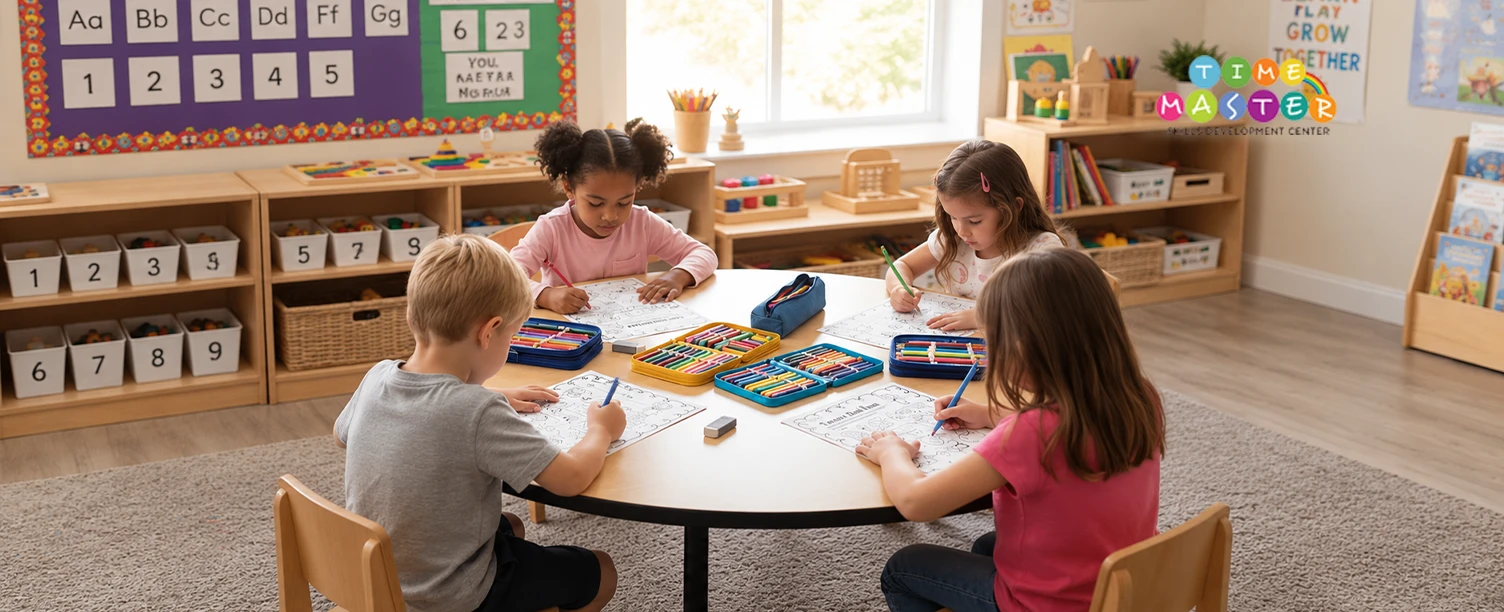
Drawing helps children build fine motor skills, boosts memory and language development, supports emotional expression, sharpens focus, encourages creativity, and builds self-confidence, all through one simple daily habit.
Does your child ask for crayons before breakfast? Good news, that's not just a phase, it's brain-building in progress.
If you're a parent in Abu Dhabi wondering whether daily drawing time for children is actually worth the mess on the dining table, the short answer is yes. Drawing isn't just a way to keep kids busy.
It's one of the simplest, cheapest, and most effective child development activities you can offer at home. And you don't need fancy art classes to get started, just paper, colours, and a little bit of time.
In this article, we'll break down six real, research-backed benefits of drawing for children, explain why it matters even more in a screen-heavy world, and share a quick local angle for parents raising kids in Abu Dhabi.
Now let's look at each benefit in detail.
Table of Contents1. What Are the Top 6 Benefits of Drawing Time for Children?
2. Why Drawing Time Matters Even More for Parents in Abu Dhabi
3. Conclusion
4. FAQs: 6 Benefits of Drawing Time for Children
What Are the Top 6 Benefits of Drawing Time for Children?
The top 6 benefits of drawing time for children are:
-
Drawing builds fine motor skills (and sets up future handwriting)
-
Drawing Strengthens Memory, Language, and School Readiness
-
Drawing Helps Children Process and Express Emotions
-
Drawing Sharpens Focus and Concentration
-
Drawing Fuels Creativity and Original Thinking
-
Drawing Builds Confidence and a Sense of Achievement
1. Drawing Builds Fine Motor Skills (and Sets Up Future Handwriting)
Every time your child grips a crayon, presses it on paper, and controls the lines, they're training the small muscles in their fingers and wrist.
This is called fine motor development, and it's one of the biggest building blocks for handwriting, buttoning a shirt, or using cutlery.
A 2024 University of Surrey study followed children over several years and found that stronger fine motor skills at a young age, including better handwriting, drawing, and building, were linked to better exam results and fewer behavioural difficulties later in childhood and adolescence.
In other words, the child scribbling at your kitchen table today is quietly preparing for school success tomorrow.
Tip for parents: Rotate between crayons, chunky pencils, and paintbrushes. Different tools work different muscles.
2. Drawing Strengthens Memory, Language, and School Readiness
This is where science gets really interesting. Research published in ResearchGate in early 2022 tracked 125 preschoolers aged 3 to 6 and found that drawing ability and language skills develop together.
They are both closely tied to working memory and executive function (the brain skills children use to focus, plan, and switch between tasks).
Here's why: when a child draws a scene from their favourite story, their brain has to pick out the important details, organise them in space, and turn an idea into something visible on paper.
That's a serious mental workout disguised as fun. It's also why many nurseries and preschools use drawing as a school-readiness activity, not just an art-corner filler.
Gradually, they improve their drawing skills and become more creative over time.
3. Drawing Helps Children Process and Express Emotions
Young children don't always have the words to say "I'm nervous about starting a new class" or "I miss my grandparents." Drawing gives them another language.
Studies on art and childhood consistently show that simple drawing activities, even doodling and colouring, can calm anxiety and help children regulate big feelings in a healthy way.
This is also why art-based approaches are increasingly used to support children with additional needs.
Recent 2025–2026 research on children with autism spectrum disorder found that structured drawing activities helped reduce anxiety and improve emotional expression over time.
For parents, this means drawing time isn't just "quiet time"; it's genuine emotional support, wrapped in crayons.
4. Drawing Sharpens Focus and Concentration
Ask any parent: getting a wiggly toddler to sit still for ten minutes is no small feat. Yet hand that same child a piece of paper and something to draw with, and focus often follows naturally.
Drawing requires sustained attention, deciding what to draw, holding the idea in mind, and following through stroke by stroke.
Over time, this builds the same "stick with it" muscle children will later need for reading, homework, and problem-solving.
It's a gentle, screen-free way to practice concentration, which matters more than ever in a world full of fast-scrolling videos and instant entertainment.
5. Drawing Fuels Creativity and Original Thinking
Children who draw regularly tend to show higher creativity and more original thinking skills that matter far beyond the art room.
Creative confidence built through drawing often carries over into storytelling, problem-solving, and even how children approach maths or science questions later on.
Drawing also teaches children something powerful: there isn't just one "right" way to do something.
A purple elephant or a house with a triangle for a door is still a success. That freedom to experiment safely is exactly the kind of thinking the world will keep needing, even as more of daily life becomes automated and screen-based.
6. Drawing Builds Confidence and a Sense of Achievement
Every finished drawing is proof to a child that they made something with their own hands. That feeling "I made this, is a confidence-building moment, especially for children who are still finding their footing in reading or numbers.
Displaying their artwork on the fridge, in their room, or even framing a favourite piece sends a clear message: your effort matters, and your ideas are worth celebrating.
Small wins like this build the self-esteem children carry into new challenges, from their first day of school to trying a new sport. You can enroll them in a drawing and painting course in Abu Dhabi to develop drawing skills and build confidence.
Why Drawing Time Matters Even More for Parents in Abu Dhabi
Early childhood development is a big focus in Abu Dhabi right now.
The Abu Dhabi Early Childhood Authority (ECA) has been actively promoting creative and cultural exposure for young children, including its Abu Dhabi Early Childhood Week, which recently brought nursery children into art spaces to support their emotional, mental, and creative growth.
The message from early years experts here is consistent: the early years matter, and creative activities like drawing play a real role in shaping language, resilience, and identity.
With more than 200 private nurseries in Abu Dhabi and many following EYFS (Early Years Foundation Stage) or Reggio Emilia-inspired curricula, art and drawing are already built into most quality early learning programmes across the emirate.
As a parent, you can easily extend this at home with a simple daily drawing habit, no art classes in Abu Dhabi required to get started, though many families do enjoy enrolling kids in one once the habit sticks.
Simple Ways to Start Drawing Time at Home Today
The simple ways to start drawing time at home today are:
- Keep it low-pressure: No lessons needed; just paper, crayons, and open time.
- Set a short daily habit: Even 10–15 minutes after school or before bedtime works.
- Ask, don't correct: Instead of "that's not the right colour," try "tell me about your drawing."
- Display their work: A fridge gallery goes a long way for confidence.
- Mix tools: Crayons, chalk, watercolours, and even sand trays all count as drawing time.
- Follow their lead: Let your child choose what to draw; free drawing builds more creativity than copying a template.
Conclusion
Drawing time for children is one of those rare activities that are simple, affordable, and backed by real developmental science. From fine motor skills and memory to emotional expression and confidence, six major benefits are quietly happening every time your child picks up a crayon.
So the next time you see crayon marks on the table, don't just see the mess; see a busy little brain doing exactly what it needs to grow.
FAQ's