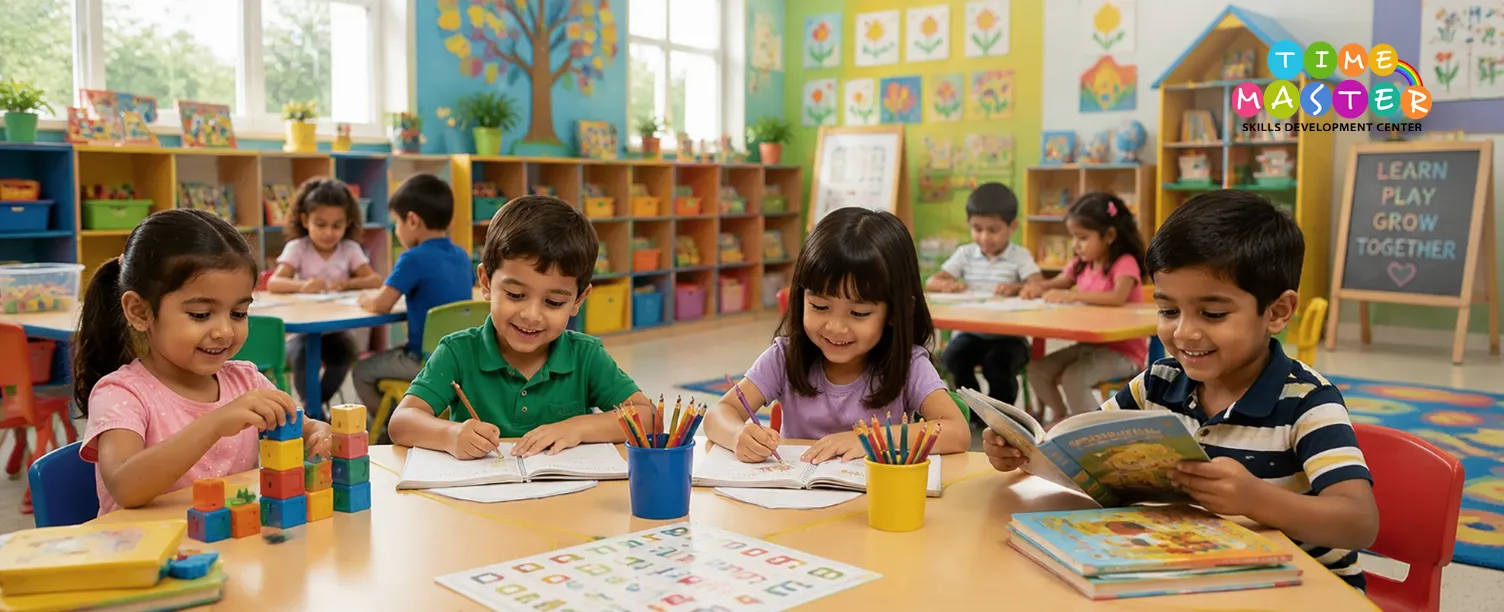
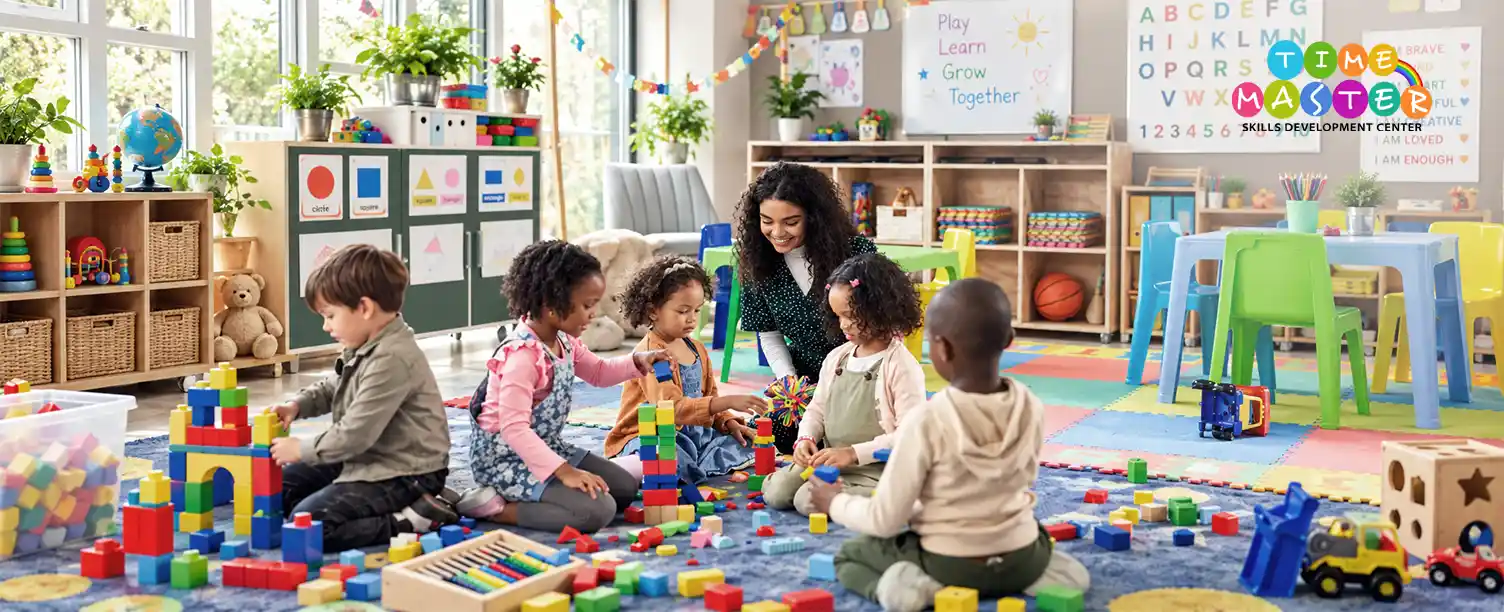
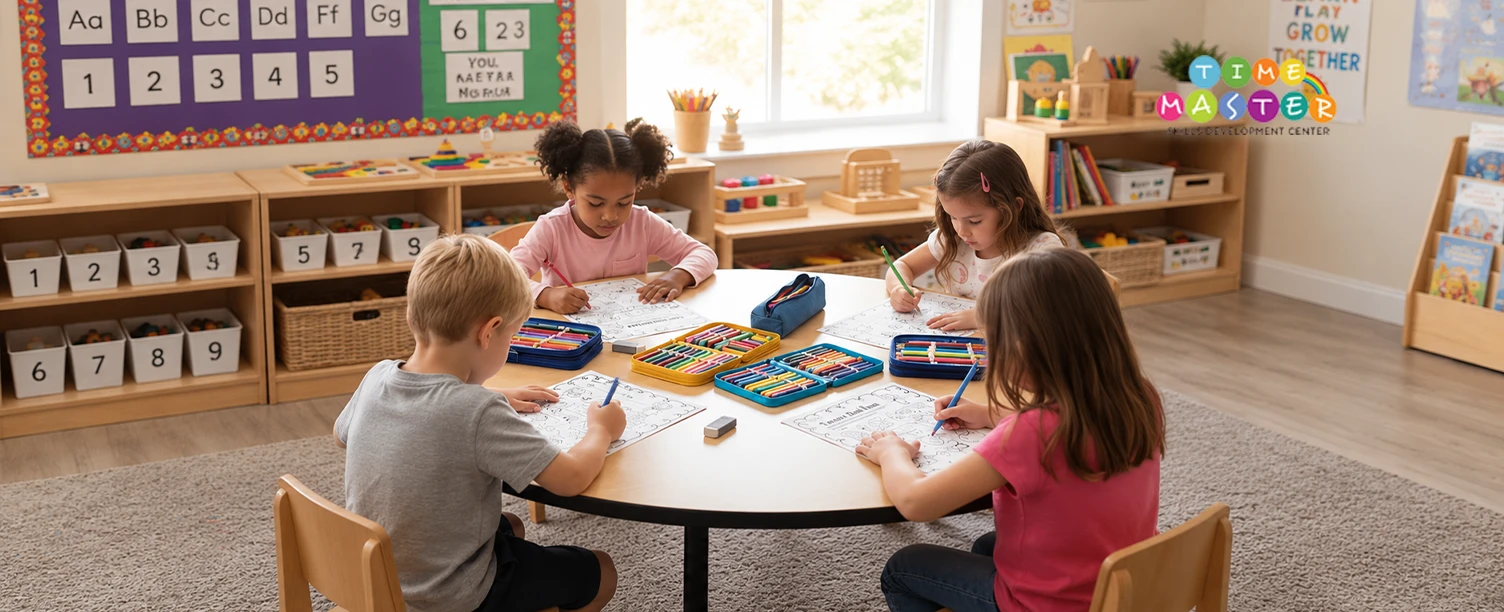
Preschool education helps children develop the social, emotional, cognitive, language, and physical skills they need before starting primary school. Through structured, play-based learning, children build confidence, independence, communication skills, and school readiness that support long-term success.
You're watching your child play at home and wondering: is it time for preschool? Are they ready? Will it really make a difference?
These are questions every parent asks. And the answer, backed by decades of child development research, is a clear yes.
Parents exploring a quality early learning environment often begin by researching options such as a Nursery in Abu Dhabi or nearby preschool programmes to understand what best supports their child's development.
What Is Preschool Education?
Preschool education is a structured early learning programme for children roughly between the ages of 2 and 5, designed to build foundational skills before primary school begins. Unlike daycare, which focuses primarily on care and supervision, preschool follows a curriculum, typically play-based, such as EYFS or Montessori, that develops a child's social, emotional, cognitive, language, and physical skills through guided activities, group routines, and hands-on exploration.
Preschool sits between home-based care and formal schooling. Children are introduced to classroom routines, early literacy and numeracy, and group social interaction, all delivered through play rather than formal instruction. This is what makes preschool distinct from both babysitting and traditional kindergarten.
Why Is Preschool Important in the Early Years?
The years between ages 3 and 6 are the most active period of brain development in a person's life. During this window, a child's brain forms neural connections at a faster rate than at any later stage, connections shaped directly by the experiences, language, and relationships a child is exposed to. This is why early learning environments matter so much: the quality of a child's early experiences has a lasting effect on how they think, communicate, and regulate their emotions.
Preschool takes advantage of this developmental window by delivering consistent, structured, and socially rich experiences during exactly the years when a child's brain is most receptive to them. Children who miss out on this kind of stimulation and structure in the early years often need more support to catch up later, which is why early years education is considered a foundation rather than an optional head start.
7 Reasons That Show the Importance of Preschool Education
Here are the seven most important reasons why preschool education matters for your child.
1. Preschool Creates Foundational Social and Emotional Growth
For many children, preschool is the first time they share space and toys with other children their age. That's a big deal.
Taking turns and sharing with others
- Managing frustration and emotions in a healthy way
- Understanding and responding to other people's feelings
- Resolving disagreements respectfully
- Building confidence in social situations
In practice, this looks like a child learning to wait their turn for a swing, negotiate who goes first in a game, or comfort a friend who is upset, small moments of collaborative play that build lasting emotional skills. Preschool also gives children the chance to form trusting relationships with adults outside their immediate family, a crucial step in emotional development.
2. Preschool Prepares Children for Primary School
Starting primary school is a significant transition. Children are suddenly expected to sit in a classroom, follow instructions from a new teacher, work alongside peers, and manage a structured daily routine, often for the first time.
Children who have attended preschool arrive far more prepared for this shift. They already understand what a classroom feels like. They know how to listen, wait their turn, follow group rules, and ask for help. In practice, this means a child who has spent a year following a preschool's morning routine settles into a Grade 1 classroom with far less anxiety than a child experiencing structured group learning for the first time.
Key school-readiness skills built in preschool:
- Listening attentively during group activities
- Following multi-step instructions
- Recognising early letters, numbers, and patterns
- Managing personal belongings and simple routines
- Communicating needs and questions to a teacher
Our Preschool programmes in Abu Dhabi and Mussafah are specifically designed to build every one of these skills gently and playfully, at each child's own pace.
3. Children Learn to Become Independent
Watch a preschooler carefully put their school bag on its hook, wash their hands before snack time, and tidy their toys back into the correct basket. These small moments of independence are enormous for a young child.
Preschool builds self-reliance through daily routines that give children ownership of simple but real responsibilities, including dressing themselves, managing snack time, and using the toilet independently. Over time, these habits become second nature, and children carry that growing sense of capability into every area of their lives.
For younger children who are beginning their early learning journey, a nurturing daycare environment can help introduce these routines and independence-building habits in a safe and supportive setting.
Independence developed in preschool directly reduces anxiety when children transition to more formal schooling. A child who believes “I can do this myself” is a child who is ready to take on new challenges.
4. Preschool Gives Children a Structured Education
Young children thrive with predictability. Knowing what comes next, circle time, then play, then snack, then outdoor time, helps children feel safe and settled. That sense of security frees them to focus on learning.
A well-structured preschool curriculum isn't rigid or pressured. It balances free play, guided activities, group learning, and creative exploration. Children are introduced to early literacy and numeracy through games, songs, stories, and hands-on activities, building genuine skills without the stress of formal academics. This structured foundation makes the shift to primary school feel natural rather than overwhelming.
5. Preschool Nurtures Creativity and Curiosity
Young children are naturally curious. Preschool protects and develops that curiosity by giving children space to explore, imagine, create, and question every single day, through open-ended activities like building with loose parts, inventing pretend-play scenarios, or free drawing without a set outcome.
Through art, music, storytelling, imaginative play, and hands-on discovery, children develop:
- Creative thinking: approaching problems in original ways
- Curiosity: asking questions and exploring ideas with confidence
- Concentration: staying engaged in activities they find meaningful
- Expressive skills: communicating ideas through drawing, movement, and words
Drawing and Painting is a wonderful way to keep this creative spark alive as children grow. For children who love performing and storytelling, Public Speaking builds on the expressive confidence preschool begins.
6. Preschool Develops Cognitive and Motor Skills
Every activity in a quality preschool setting is building your child's brain. Threading beads develops fine motor control. Building blocks develop spatial reasoning. Sorting shapes develops early mathematical thinking, for example through simple puzzles and block play. Hearing stories develops vocabulary and comprehension. Painting develops hand-eye coordination and prepares children for writing.
These aren't incidental outcomes. They are the deliberate, evidence-based purpose of preschool learning activities.
Cognitive skills built in preschool:
- Problem-solving and logical thinking
- Memory and concentration
- Early numeracy and pattern recognition
- Language development and vocabulary growth
- Attention span and focus
As children progress, our Abacus Course and Maths Foundation programme build powerfully on the numeracy thinking that preschool begins.
7. Preschool Builds Confidence and Self-Esteem
Perhaps the most lasting gift preschool gives a child is belief in themselves.
When a child finishes a puzzle for the first time, completes an art project, learns a new song, or makes a new friend, they experience genuine pride. Teachers who celebrate effort, not just results, help children understand that trying matters, that struggling is part of learning, and that they are capable.
This confidence shapes how a child approaches every challenge they will ever face. Children who feel confident at preschool age are more willing to participate in class, more resilient when things go wrong, and more motivated to keep learning.
Our Personality Development programme continues building this self-belief as children grow into their school years.
Benefits of Preschool Before Kindergarten
Preschool builds skills across every area of development at once. Here's how each area translates into real classroom and life benefits before a child reaches kindergarten.
| Development Area | Preschool Benefit |
| Social | Sharing, teamwork, turn-taking, and forming friendships |
| Emotional | Confidence, emotional regulation, and resilience |
| Cognitive | Problem-solving, memory, and early numeracy |
| Physical |
Fine motor skills and hand-eye coordination |
| Language | Vocabulary growth and communication skills |
| Independence | Self-care, routine management, and decision-making |
How Preschool Helps Working Parents
Beyond child development, preschool solves a very practical problem for working families: reliable, structured care during the day that's also genuinely educational, not simply supervision. A quality preschool programme means parents can return to work with confidence that their child is in a safe, licensed environment led by qualified teachers, following a real curriculum, and building the same routines that support family life at home.
Many preschools also offer extended hours, structured drop-off and pick-up times, and consistent daily schedules, all of which make it easier for parents to plan their working day around their child's care.
Play-Based Learning vs Traditional Learning
Most quality preschools, including EYFS and Montessori-based programmes, favour play-based learning over traditional, instruction-led teaching. Here's how the two approaches compare.
| Play-Based Learning | Traditional Learning |
| Child explores and discovers | Teacher instructs directly |
| Hands-on activities | Worksheets and drills |
| Encourages creativity | Encourages memorisation |
| Active, child-led learning | Passive, teacher-led learning |
Choosing the Right Preschool in Abu Dhabi
Not every preschool delivers the same quality of early education. When comparing options in Abu Dhabi or Mussafah, look closely at these five factors:
- ADEK approval: Confirm the preschool is licensed and approved by Abu Dhabi's Department of Education and Knowledge (ADEK).
- Teacher qualifications: Ask about staff training in early childhood education and their experience with this age group.
- Safety: Check child-to-teacher ratios, facility security, hygiene standards, and emergency procedures.
- Curriculum: Look for a structured, play-based framework such as EYFS, rather than an unstructured childcare setting.
- Communication: A good preschool keeps parents informed through regular updates, reports, and open conversations about their child's progress.
What Makes a Good Preschool?
A good preschool balances structure with warmth. Beyond ticking the boxes on licensing and safety, the strongest programmes share a few common qualities: small class sizes that allow individual attention, teachers who genuinely enjoy working with young children, a curriculum that blends free play with guided learning, clean and stimulating classroom environments, and a culture that treats parents as partners rather than bystanders in their child's early education.
Signs Your Child May Be Ready for Preschool
Every child develops at their own pace, but these are common signs of readiness:
- Shows curiosity about new experiences and people
- Enjoys playing near or alongside other children
- Can follow simple two-step instructions
- Communicates basic needs verbally
- Manages short time apart from a parent without significant distress
- Shows growing independence in daily tasks like eating or tidying
- Expresses interest in books, drawing, or imaginative play
When Should You Delay Preschool?
Readiness isn't only about age. It may be worth waiting a little longer if your child becomes extremely distressed by short separations, has ongoing health needs that require close daily monitoring, or shows little interest in being around other children yet. A short delay is not a setback: most children catch up quickly once they do start, and starting when a child is emotionally ready tends to lead to a smoother, more positive experience than starting on a fixed timeline alone.
Questions to Ask During a Preschool Visit
A visit is the best way to judge whether a preschool is the right fit. Useful questions to ask include:
- What curriculum do you follow, and how is a typical day structured?
- What is your child-to-teacher ratio?
- Are your teachers trained in early childhood education?
- How do you handle separation anxiety in new students?
- How and how often do you communicate with parents about progress?
- What safety and hygiene procedures are in place?
How Parents Can Support Preschool Learning at Home
The classroom and home learning work best together. A few simple daily habits make a real difference:
- Read together every day: 10 minutes of shared reading builds vocabulary and a love of stories
- Encourage imaginative play: let them build, pretend, and create freely
- Ask open-ended questions: “What do you think would happen if...?” develops thinking skills
- Establish gentle daily routines: predictable mornings and bedtimes build security
- Praise effort and curiosity: celebrate the attempt, not just the outcome
- Explore creative activities: drawing, painting, and crafting support motor development
- Talk about feelings: naming emotions at home reinforces what they practise at preschool
Key Takeaways
- Preschool builds social, emotional, cognitive, and physical skills during the most active years of brain development.
- Play-based learning, not worksheets, is what best prepares young children for school.
- Daily routines built in preschool develop confidence and real independence.
- A quality preschool supports long-term academic and emotional success, not just short-term childcare.
- Parents should choose a licensed, ADEK-approved programme with qualified teachers and a clear curriculum
FAQ's
.webp)